17.6 Tax choice
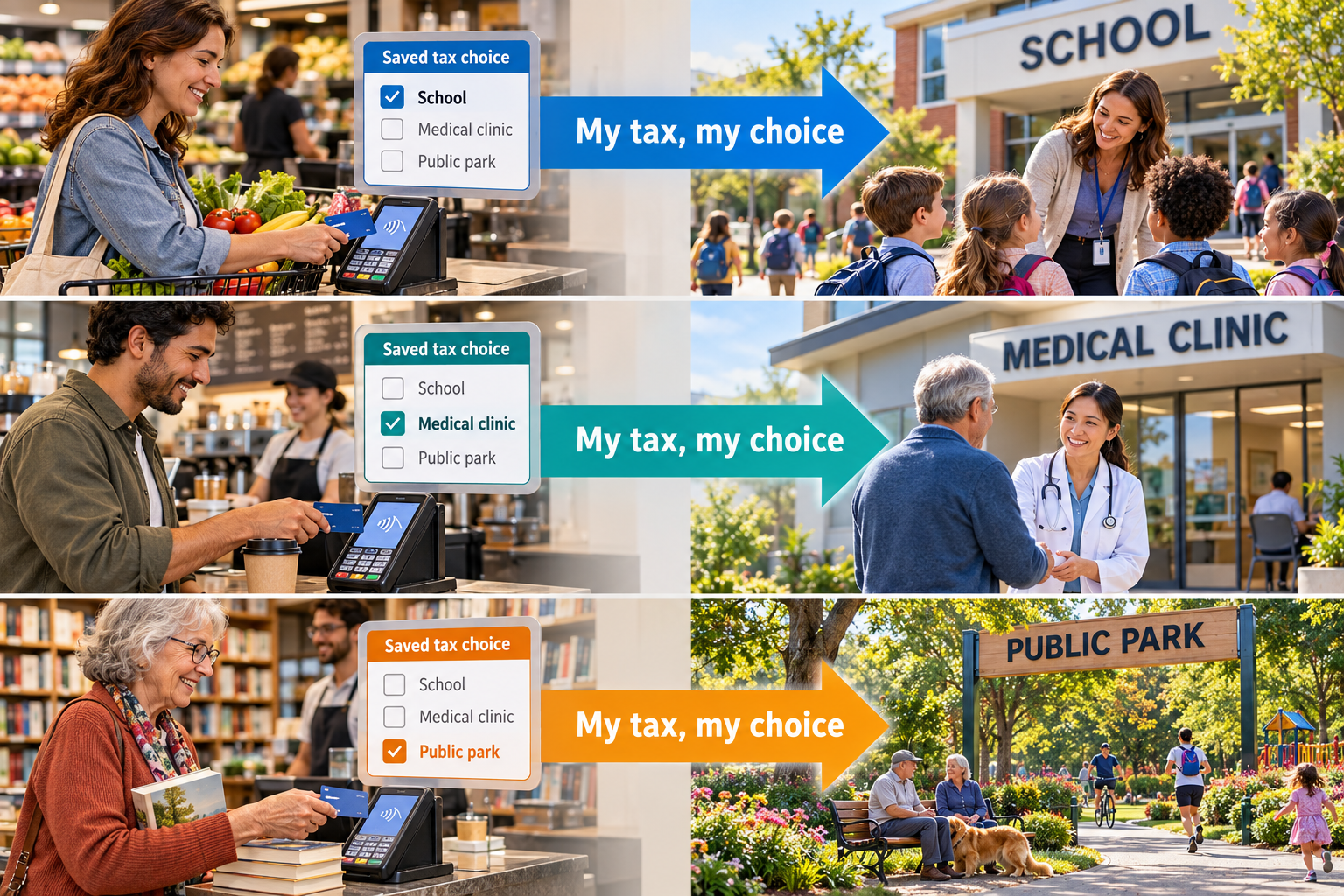
Every consumer is a taxpayer. Their ratings on public services determine how their consumption tax is allocated to fund them. This is called tax choice.
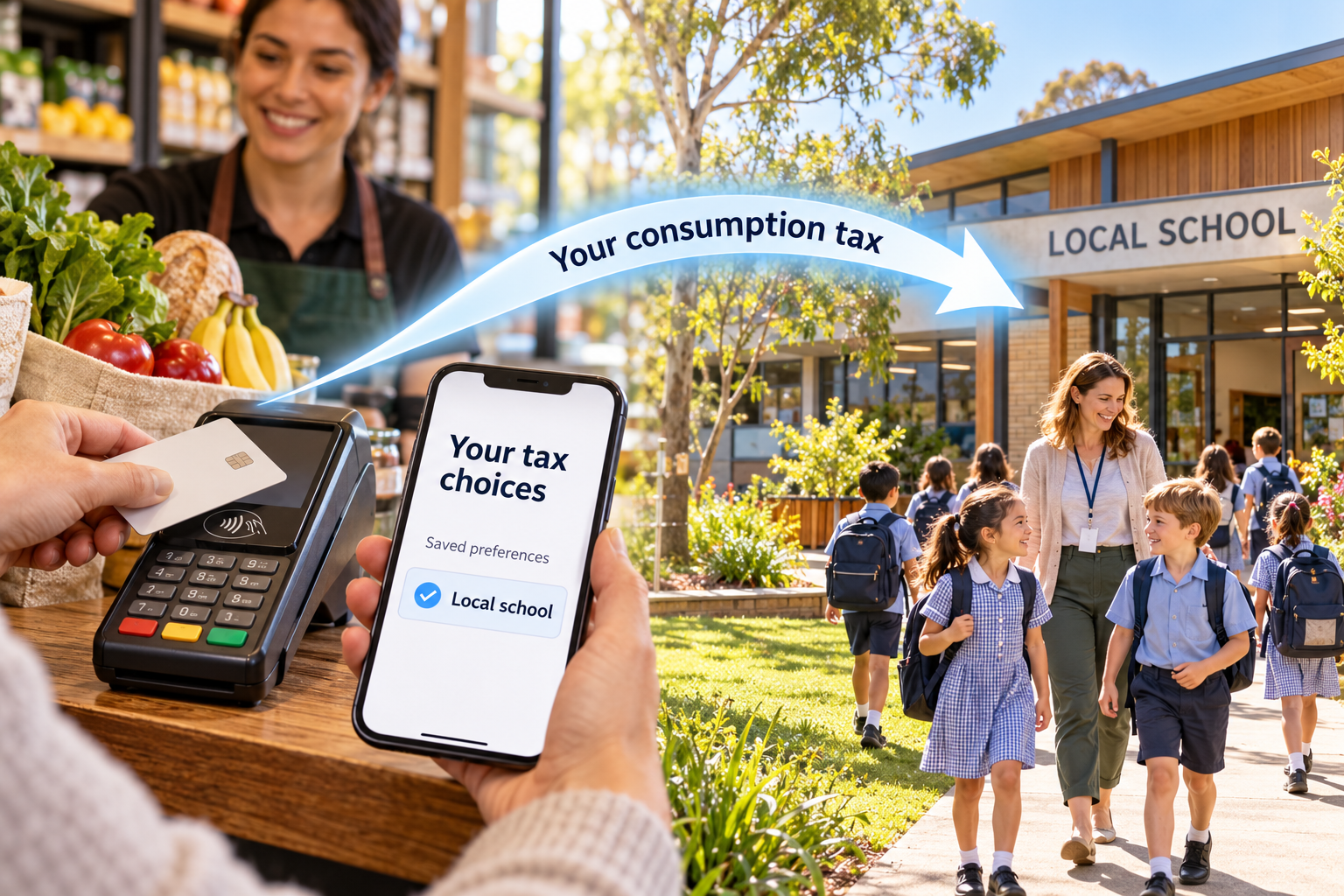
Tax choice transforms public services into a competitive marketplace.
The competition is between ideas as well as providers. Different taxpayer subcommunities can support different ways of addressing the same problem without first obtaining majority agreement. Approaches which produce better practical results can attract increasing allocations and become dominant, while remaining exposed to competing proposals and the continuing choices of taxpayers.
What if people allocate tax selfishly? That's a good thing! Selfish allocation funds the services people actually use and like. That is exactly what a market does.
There is continuous accountability. Voting and allocation are ongoing, not tied to election cycles. This creates constant pressure for services to remain responsive, innovative, and cost-effective.
Competition for limited resources is built into the system. Tax allocations are finite, so services must compete for funding, just as firms compete for consumer spending. This prevents waste and ensures resources flow to the services people actually want.
Service operators run under profit and loss. Their survival depends on attracting enough citizen support. This aligns their incentives with public preferences, reducing inefficiency and corruption.
Taxpayers as consumers
In economic terms, money is the ultimate power, because money buys goods. In a market economy, you can get anything if you pay the price - and have the money.
Taxpayers represent consumers purchasing goods and services for the public. They have individual freedom to choose how their tax is spent. This mirrors the free market: services that are valued more receive more funding. Taxpayers exercise consumer power over the producers who implement public services. If a service is poorly run, citizens can reduce or withdraw their allocations, just as they would stop buying from a bad business. Services thrive or fail based on how well they meet demand. The difference is that instead of buying products, citizens are “buying” public services with their tax allocations. Tax choice drives up quality and efficiency in the same way consumer choice drives markets. The benefit cannot be overstated. In fact, taxpayers may exercise more consumer power than in the free market. They are organised and unionised through online forums. And it costs nothing to change allocations. A taxpayer can support a new competing service while still using the old one, until it has been superseded.
Will millions of taxpayers make good decisions?
Human attributes like intelligence or empathy follow a normal distribution: the familiar bell curve. With millions of taxpayers taking responsibility for allocating money to public services, the outcome is highly predictable: a balanced mix of priorities: caring for those in need, advancing society, supporting the economy, and protecting the environment.
People hold diverse opinions about what matters most, because they live unique lives with unique needs. One person may rely on public transport, while another drives their own car. One may have lost family members to cancer and choose to fund cancer research. This tremendous plurality of human experience creates a corresponding diversity in how tax is allocated.
Selecting public services is much like selecting Products for a shopping trolley. Consumers do not need to know how a Product works internally; familiarity with how well it works for them is enough. Public services are likewise presented as fully costed contracts. Taxpayers need only rate the services they value, while the water-filling algorithm converts those preferences into complete funding allocations.
By contrast, a centralised government treats citizens like children, making consumer choices on their behalf, as though bureaucrats know better than the population itself.
In reality, millions of taxpayers make more informed decisions about thousands of public services than a handful of politicians ever could. The sheer volume of information is staggering. There may be hundreds of registered public services just for supporting social media alone.
Taxpayers take more interest in the running of the nation
In nations with democratically elected governments, the influence of a single voter is almost nonexistent. The public rarely participates in the decisions made each year that truly matter to them. And statistically, the chance that one vote determines an election outcome is practically zero.
Tax choice changes everything. It turns obligation into influence. Consider this: over a lifetime, middle‑income earners pay a fortune in tax. That represents enormous purchasing power for public services. With tax choice, taxpayers are inspired by the idea that they can directly influence society. It fills a void for those who don't feel like they contribute to society, despite paying tax. Now, their money becomes a tool of agency: an instrument of power shaping the nation every single day.
Tax choice does not require consensus
Tax is not pooled and then allocated by majority rule. Instead, each taxpayer’s contribution is directed according to their own choices, without any need for consensus. This makes tax choice far superior to majority rule. People can disagree on how money should be allocated to public services. It is not a problem. Each taxpayer allocates their own tax in the way they want, and no one can say otherwise. There is no need for control by an authority, and no need for conformity. The hard problem of reaching consensus on how tax should be allocated is eliminated.