17.9 Supply Chains
Separate accounts produce correct accounting
A Person undertaking productive activity opens a B-account with a category describing that activity. A
programmer, for example, uses an appropriately categorised software business account to buy compatible computers,
technical publications, hosting, and other productive inputs. Buying the same Products through a
personal-funds account is personal consumption and requires payment into an R-account.
Separate accounts cause receipts and expenses to be recorded in the correct economic context. Compatibility checks block many mistaken transfers before they occur. Payment cards and wallets may apply additional user-defined restrictions, such as preventing a business card from paying any R-account, even though the constitutional CBPS rules would permit the taxed transfer.
A business whose Products are all described by one broad category may use one account even where
other overlapping categories could also describe some of those Products. A business conducting activities that
cannot all be described by one category uses separate accounts. For example, a Person who both imports
and exports uses an import-wholesale B-account for importing and an exporter B-account for
exporting. Free accounts and untaxed internal transfers allow the owner to organise and fund those activities
without treating them as separate legal organisations.
Most labour is a productive input rather than a Product supplied directly for consumption. An engineer, for example, receives salary through a B-account whose Product Category describes the engineering activity. Where a seller supplies Products both for consumption and as productive inputs, the seller uses an R-account for the consumer sales and a B-account for the supply-chain sales.
Supply chains
We want a system that is simple, easy to administer, avoids tax evasion, and protects people’s privacy. The foundation is automatic identification of payments that fall outside normal commerce. Normal commerce follows a realistic supply chain: consumers make payments to producers and pay tax, while producers pay their owners or other producers within the chain.
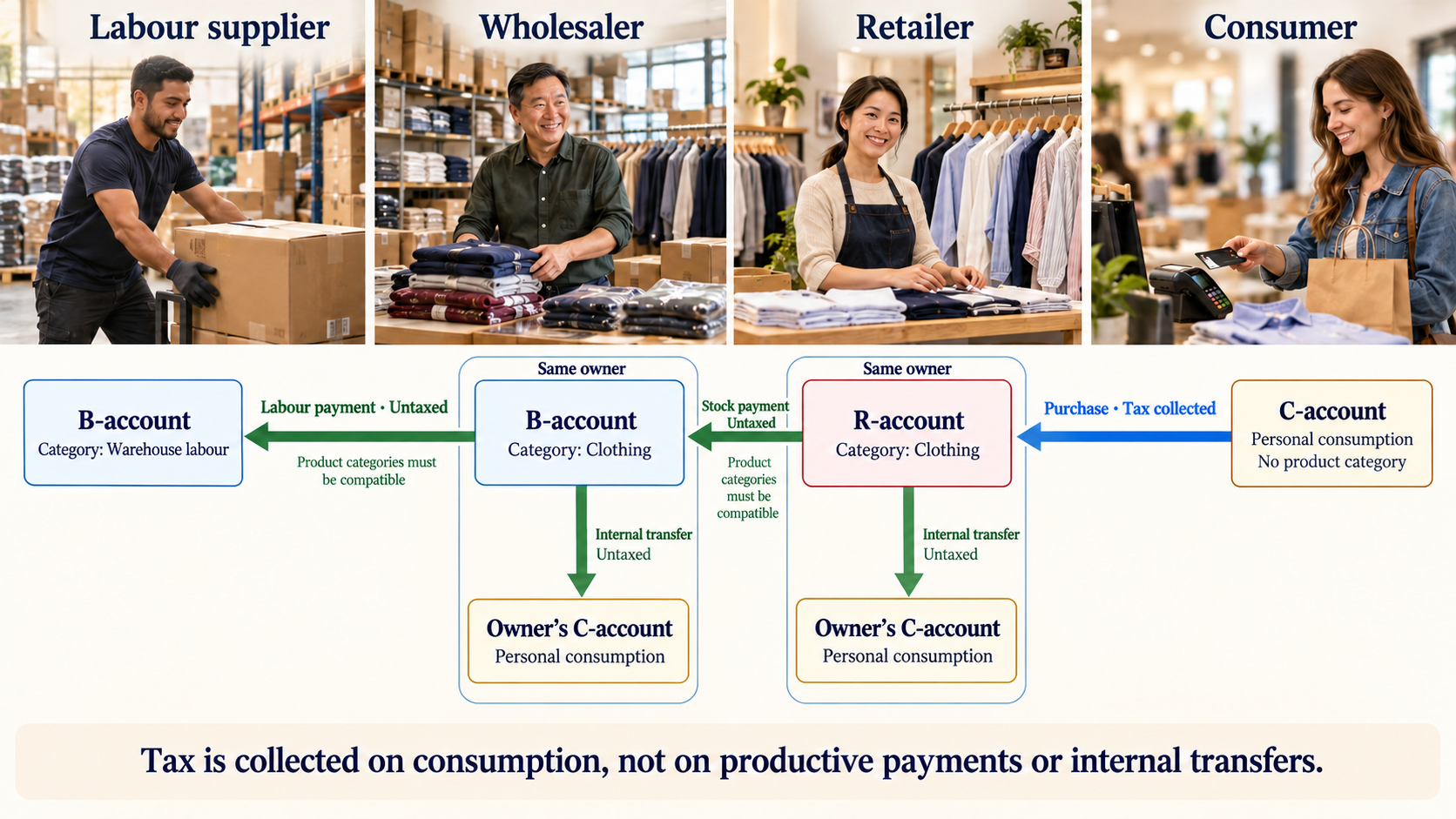
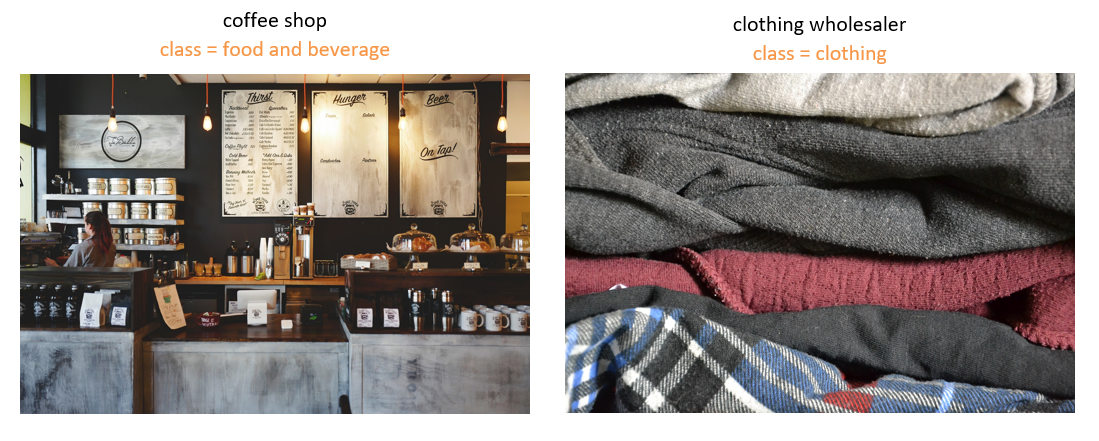
Goods and services are grouped into broad classes, which allows producers to be classified. A coffee shop belongs to food and beverage. A clothing wholesaler belongs to clothing. Other examples include electronic components, automobiles, and computer equipment. There are around fifty such classes, and every good or service belongs to at least one.
These classes provide the basis for checking whether payments between producers are consistent with a realistic supply chain. For example, clothing should not be an input to a coffee shop, and food and beverage should not be an input to a clothing wholesaler.
This system simplifies auditing. There is less need to review bank account statements, because restrictions on transfers are imposed automatically. They largely eliminate the potential for producers to use company accounts to disguise personal purchases and avoid paying consumption tax.
Tax evasion becomes nearly impossible when the supply chain itself enforces honesty.