21.2 Information complexity
The people collectively do a better job managing the information complexity of thousands of fine‑grained public services than a conventional government:
- Decentralized Knowledge: Hayek’s insight: Knowledge is dispersed among individuals, not concentrated in a central authority. Each citizen knows their own needs, preferences, and local conditions better than bureaucrats. When millions of citizens allocate tax daily, they collectively process far more information than a small group of planners ever could.
- Continuous, Granular Feedback: Citizens rate services (strongly against → strongly for) and allocate tax daily. This produces real‑time demand signals across thousands of services. Conventional governments rely on annual budgets and slow bureaucratic reports, which are outdated and coarse. The system’s feedback loop is faster, finer, and more accurate.
- Diversity of Perspectives: A government is limited by the biases and priorities of politicians or ministries. Citizens represent diverse backgrounds, industries, and experiences. This diversity ensures that niche services (e.g., rare medical treatments, cultural programs) get recognized and funded by those who value them, rather than being overlooked by central planners.
- Incentive Alignment: Citizens allocate tax to services they actually use or believe in. Operators must compete to earn support, so they present clear, transparent information. In government systems, bureaucrats may be incentivized to protect budgets, hide inefficiencies, or favor political allies. This distorts information flow.
- Complexity Distributed Across the Population: Thousands of services may be too complex for a single ministry to evaluate. But when complexity is distributed across millions of citizens, each person only needs to understand the services relevant to them. This “divide and conquer” approach makes the overall system manageable.
People collectively do a better job at handling the complexity of thousands of fine‑grained services because: Knowledge is decentralized. Feedback is continuous and granular. Diversity ensures niche needs are met. Incentives align with real preferences. Complexity is distributed across the population.
In a nation with a hundred million people, even if only a few percent take considerable interest in some of the initiatives, that still represents millions of people, some of which have considerable expertise, and collectively they have far greater ability to process the enormous amount of information contained in thousands of initiatives, compared to any political party.
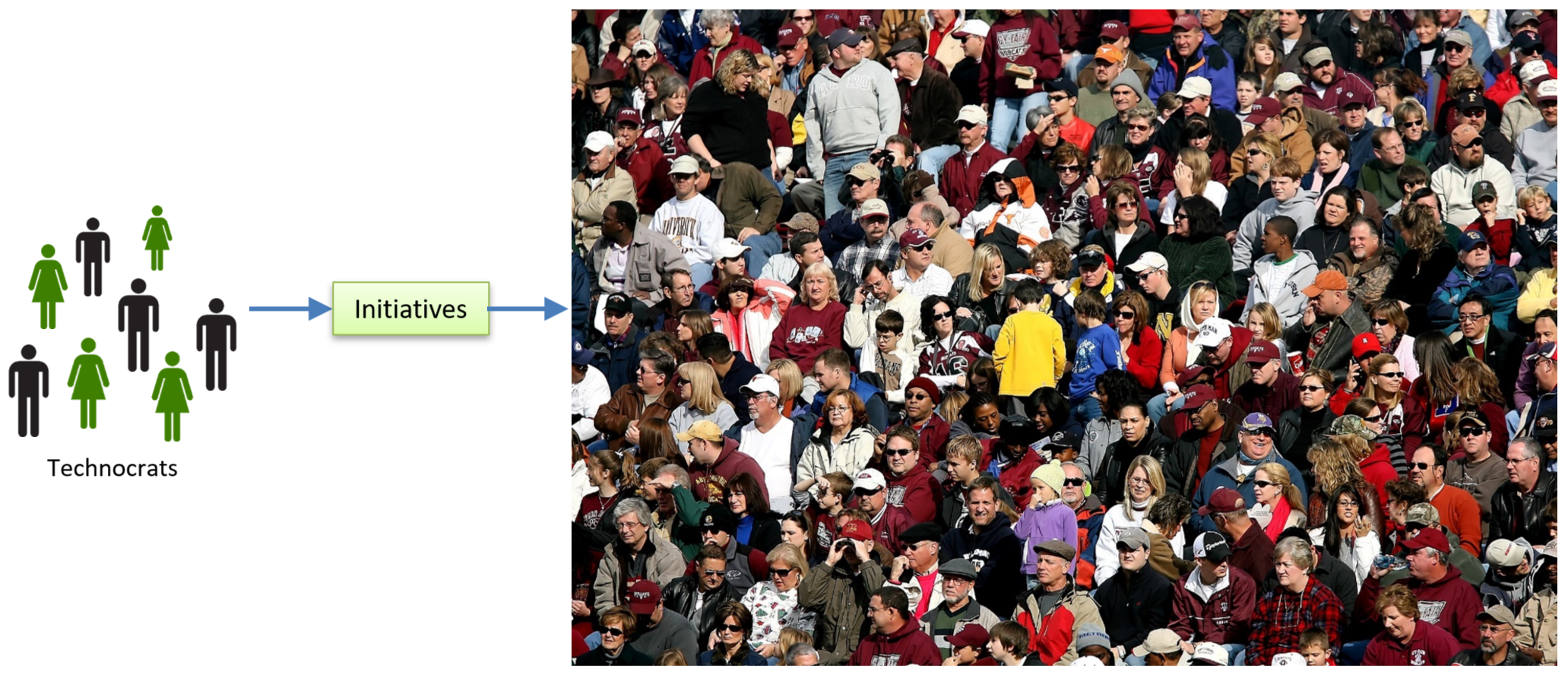
The knowledge problem and economic calculation
The knowledge problem concerns facts and preferences dispersed across the population which cannot be fully known by a central planner. Tax choice allows each taxpayer to act directly on the part they possess. Because allocating tax to one service means not allocating it to another, the resulting funding signals combine local knowledge with relative priorities.
In ordinary markets, consumer spending gives producers the demand-side valuations on which economic calculation ultimately depends. Tax choice gives taxpayers the same role for public services: their allocations determine which services receive revenue, while competing operators use market prices and profit and loss to decide how to provide them. Taxpayers choose among ends; operators calculate among means.