2.7 Bridging capitalists and socialists
The ideological divide
It is normally assumed there is an impossible ideological divide between capitalists and socialists. One side prizes freedom, competition, and private ownership. The other emphasizes collective responsibility, fairness, and public accountability.
For more than two centuries, the divide between the political left and right has remained the dominant fault line in politics. Parties, institutions, and individual issues have changed, but this underlying conflict has endured. It remains by far the most significant source of political division today.
Bridging the divide
Tax choice bridges the ideological divide:
- To capitalists, tax choice is consumer choice. It is the free market applied to public services. Competition, profit and loss, and voluntary choice drive efficiency and innovation.
- To socialists, tax choice is collective funding of public services. Essential services are sustained, people in need are looked after, resources are shared, the environment is protected, and citizens exercise direct influence over society’s priorities.
Both see their values reflected in the same system. Capitalists find freedom and competition. Socialists find solidarity and fairness. Tax choice becomes the bridge. It aligns two opposing philosophies in a single framework. It turns taxation into consumer power, and consumer power into democracy.
Tax funding of public services is simply a way for taxpayers to purchase services for society within a free market. The entire economy operates as an unregulated free market, with private ownership and no tax on production. Yet heavy consumption taxes may still fund public services. Citizenship and hence tax is voluntary, which makes the system appealing to libertarians. Public services are implemented by the private sector, under profit and loss, competing for funding from taxpayers. Taxpayers act as consumers, buying services by allocating their tax to them. If we set aside the redistributive element of taxation, the system is essentially a way to unionise consumers: giving them collective power to direct resources toward the services they value most.
Tremendous power and tremendous restraint
VoTa presents an apparent paradox. Its State has powers and technical capabilities extending well beyond those of any existing State, yet its authority over peaceful people is more restricted than that of any existing State. It combines an extraordinarily capable collective system with extraordinarily limited power to direct an individual's life.
The State establishes biometric identity checking and implements the monetary system down to the accounts people use in daily life. The CBPS carries commerce payments, enforces account-transfer rules, collects consumption tax automatically, and allocates tax revenue to public services. The product and property ledger can record ownership, custody, inventory, delivery, and exchanges of property, while linking monetary settlement with the transfer of Products. UBI redistributes part of the proceeds of taxation, and taxpayers collectively possess tremendous power to fund services for the community.
Taken alone, that concentration of identity, monetary, commercial, property, and taxation infrastructure could appear more powerful and intrusive than the machinery of existing governments. In an ordinary political system, whoever captured it could use it to monitor people, control exchange, favour allies, punish opponents, or direct production. VoTa therefore cannot be understood merely by listing what its institutions are technically capable of doing. It must also be understood through the exceptional restrictions placed upon their use.
The State imposes the Non-Aggression Principle and Non-Discrimination Principle upon itself. It may protect privacy, freedom, autonomy, and property rights, but may not violate those rights to pursue political objectives. It cannot grant selected people advantages at the expense of others. There is no political government with general authority over the system, no politicians who can redirect it, and no ruling group entitled to use its records or powers for its own purposes. Public decisions are made through direct democracy rather than representatives exercising power on behalf of citizens.
These restrictions are so extreme that they remove even an incremental path to capture. Political capture normally begins with a small exception, appointment, subsidy, licence, identity-based classification, discretionary enforcement power, or temporary emergency authority. The beneficiary then uses that foothold to obtain further powers and advantages. VoTa provides no political office to capture, no general discretionary authority to expand, and no constitutional means to grant the first selective advantage. Each incremental step would already violate the NAP or NDP. Capturing the system would therefore require an open repudiation of its constitutional foundation rather than a gradual accumulation of power through its lawful institutions.
The result is a State that is extraordinarily powerful in its capacity to protect rights, operate common infrastructure, collect revenue, redistribute income through UBI, and fund collective services, while being extraordinarily restricted in what it may do to any Person. It is difficult to imagine a State with greater technical and collective capacity, but also difficult to imagine one more tightly prevented from governing the peaceful choices of individuals.
This paradox provides another bridge between capitalists and socialists. Capitalists obtain free markets, private property, freedom for producers, minimal regulation, individual autonomy, and a State unable to direct peaceful economic activity. Socialists obtain effective taxation, redistribution through UBI, powerful collective institutions, and substantial taxpayer funding for services that benefit the community. These are not balanced by giving each side partial control. VoTa instead maximises collective capacity while minimising collective control over the individual.
Socialising consumption, not production
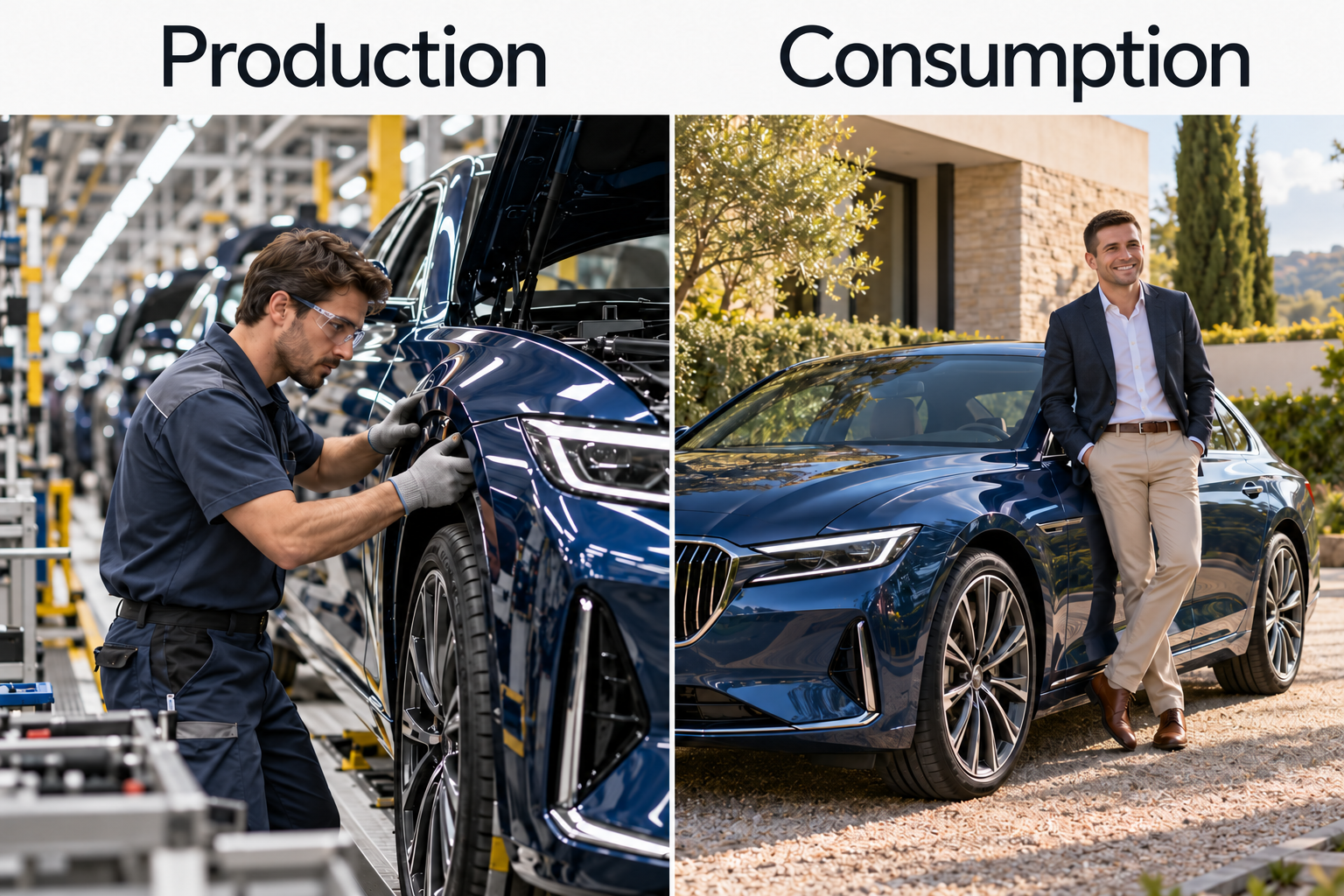
A central design choice in this constitution is the decision to socialise consumption rather than production. This stands in contrast to socialist and Marxist traditions, which focus on collective ownership or control of the means of production. Understanding this distinction clarifies the philosophical foundations of the system.
- Production as a Creative Act: Production is treated as a voluntary, entrepreneurial, and fundamentally creative activity. It is the process by which individuals transform effort, skill, and imagination into goods and services. Because creativity thrives under autonomy, the constitution imposes no taxes, no regulatory burdens, and no ownership claims on producers. They are free to innovate, compete, and experiment without interference. In this framework, production is not a domain to be socialised, but a domain to be liberated.
- Consumption as the Social Act: Consumption, by contrast, is where individuals participate in the shared life of the community. It is the moment where private preferences intersect with public consequences. Every act of consumption reflects a choice about what is valued, what is enjoyed, and what is demanded from the broader society. For this reason, the constitution places the social mechanism, the consumption tax and its allocation, at the point where individuals draw upon the fruits of production. Consumption becomes the natural place to express social responsibility, fund public services, and coordinate shared benefits.
Of course, socialising consumption significantly affects demand for goods and services and therefore affects producers. This is not incidental: it provides a way to regulate producers indirectly through the choices available to consumers. For example, ensuring that everyone can meet their basic needs for food and shelter, whether through public services or a UBI, would greatly reduce the pressure to accept very low-paid work. Employers would then need to offer better pay and conditions to attract workers, without the State directly regulating producers through minimum wages or mandatory annual, sick, maternity, or long-service leave entitlements.
Unionising consumers, not workers
Traditional labour unionism seeks to correct an imbalance of power between workers and employers. By bargaining collectively, and ultimately by withholding their labour collectively, workers may obtain better pay and conditions than they could negotiate individually. VoTa permits peaceful unions and recognises the additional bargaining power they can give workers. Revolutionary Marxist and Marxist–Leninist traditions take the conflict between labour and capital much further, seeking through revolution to transfer control of production to workers, the collective, or the State.
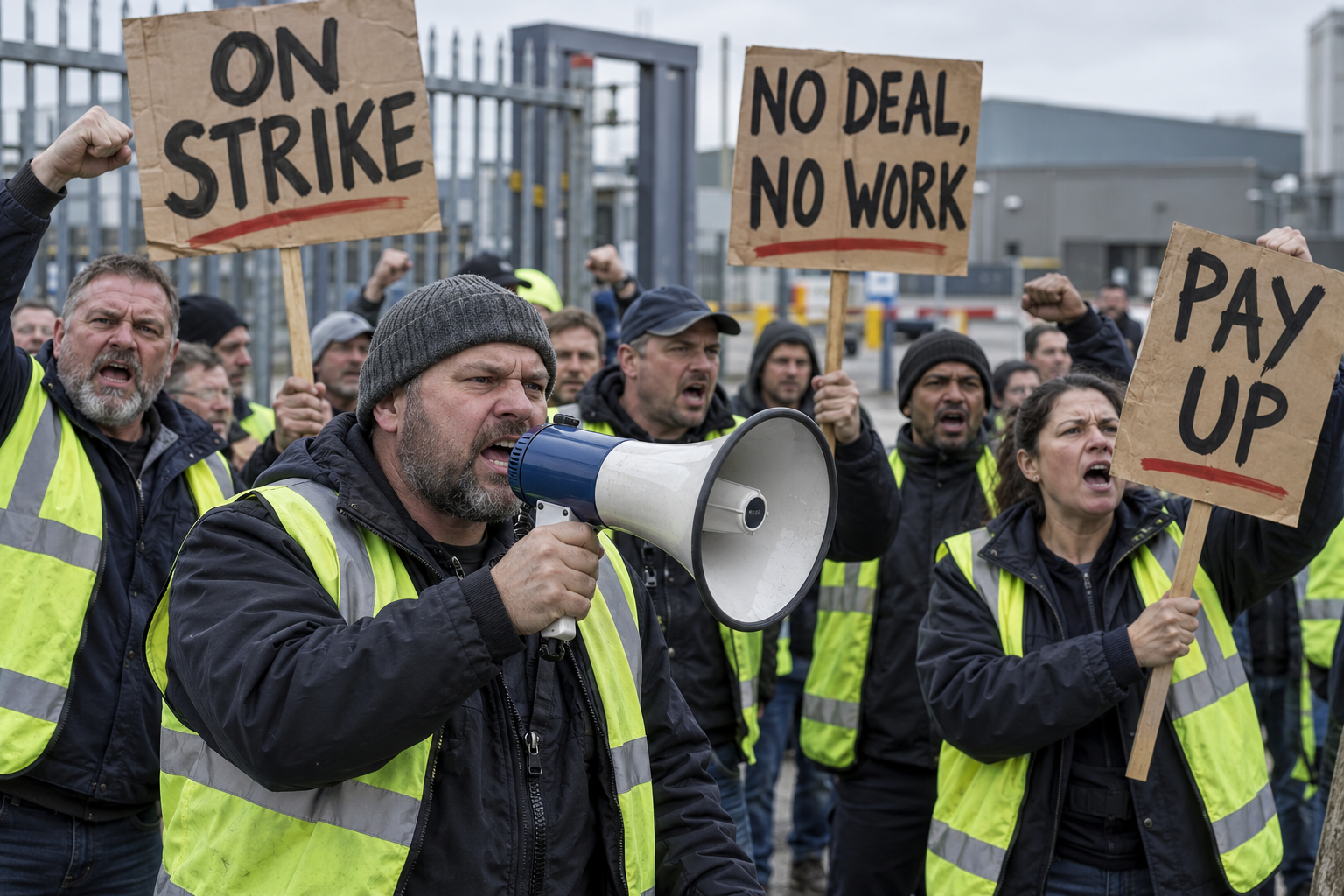
VoTa does not, however, treat the relationship between workers and employers as the fundamental division of the economy. They occupy different positions within production: workers supply labour, while employers combine and use labour, capital, knowledge, and risk to produce goods and services. Their interests can conflict, but both are producers, and both ultimately depend on meeting the demands of consumers.
VoTa places its distinctive collective mechanism on the other side of the exchange. Tax choice pools part of consumers' purchasing power while allowing each taxpayer to direct their own share. In this limited sense, it unionises consumers: just as a labour union gives workers more leverage than they possess separately, tax choice gives consumers greater power to direct funding, set expectations, and choose among competing producers than they possess through isolated purchases.

The analogy extends beyond merely aggregating isolated choices. Taxpayers can organise in online forums, examine public-service contracts, share evidence about which services perform well or poorly, and coordinate their funding decisions. They therefore possess genuinely organised collective power while each taxpayer retains control of their own allocation. With \(R_{\mathrm{svc}}=0.30\), taxpayers could direct some of that immense purchasing power towards a new tax-funded competitor to even the largest corporation, allowing the competitor to displace it if it provides greater public value. Workers remain free to organise in relation to employers, while consumers organise their purchasing power in relation to producers. VoTa's emphasis is on strengthening the latter relationship without placing production under collective ownership or direct State control.