2.5 The state without political government
The harm caused by governments
In the 20th century, far more people were killed by their own governments than by foreign armies. According to political scientist R.J. Rummel, an estimated 170–200 million people were killed by their own governments during that century, while roughly 35–40 million died in interstate wars. The pattern is clear: throughout modern history, governments have often been more dangerous to their own populations than external enemies.
There has been violence caused by war and conflict in every year of the 20th century.

Beyond the extreme cases of democide, governments across the world have a long record of causing harm through structural, economic, and political failures:
- Imposing complex, discriminatory, and discretionary laws and regulations
- Levying heavy taxes on citizens
- Allocating public funds without direct control by the people who pay them
- Restricting basic freedoms, such as a business owner's right to choose whom they may serve
- Granting benefits to special interest groups in exchange for political influence (e.g., subsidies to the U.S. sugar industry)
- Interfering with free markets through mandates, subsidies, and protectionism
- Using public office for private gain
- Funding inefficient or unaccountable public services
- Committing human rights abuses
- Allowing systemic corruption to take root
- Starting wars and forcing citizens to fight in them through conscription
- Expanding the money supply and causing inflation
- Growing in size and scope over time: raising taxes, increasing regulation, and reducing freedoms
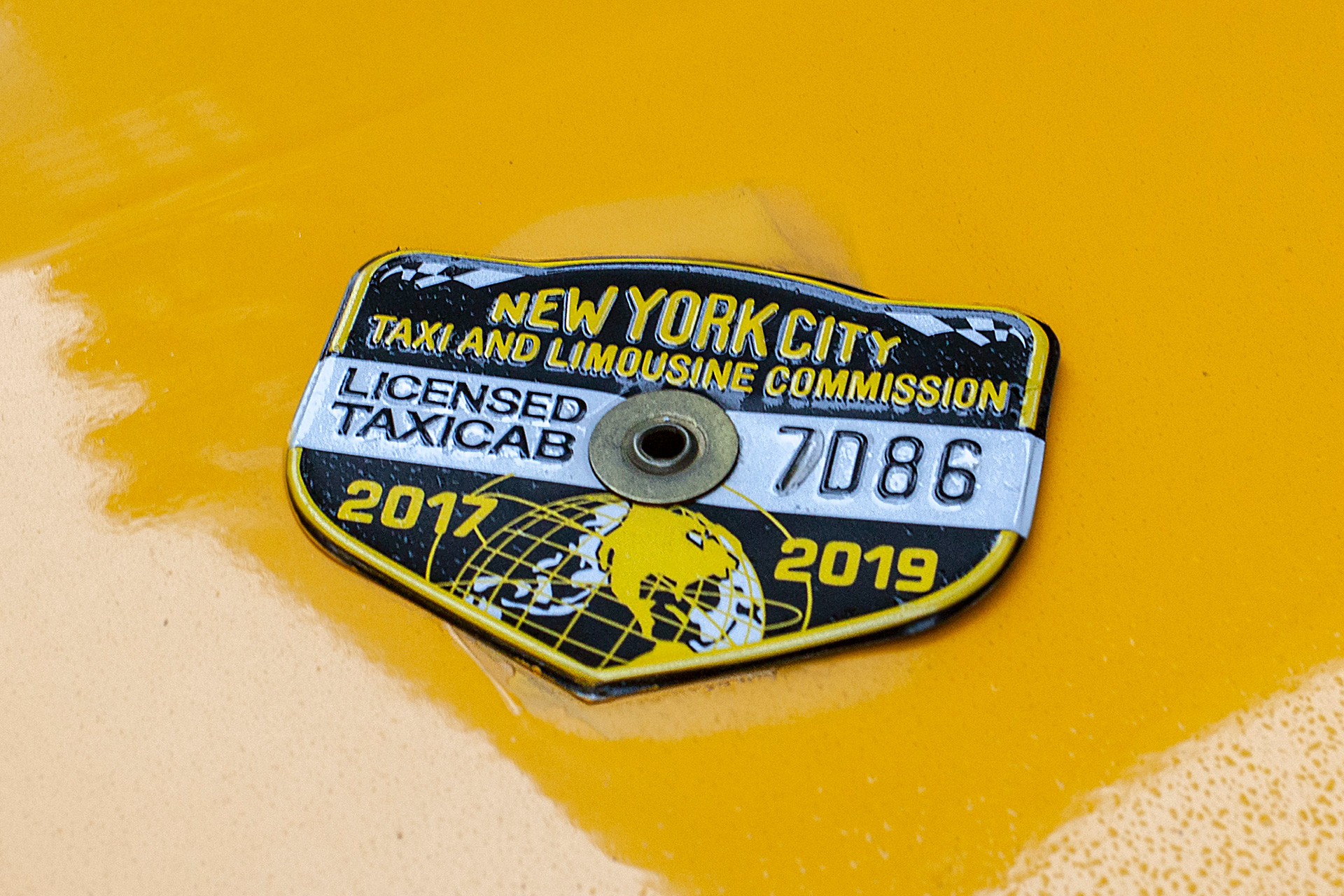
- Creating artificial monopolies through patents, licensing, and barriers to entry (e.g., taxi medallions in the U.S. reaching nearly $1M in 2013)
No politicians or parties
In Common Sense (1776), Thomas Paine wrote:
Government, even in its best state, is but a necessary evil; in its worst state, an intolerable one.
Paine’s argument was that society itself is natural and beneficial, while government exists only to restrain wrongdoing. Even then, it tends to become oppressive.
This raises a fundamental question: is it possible to have a state without a government, one that still protects property rights and ensures the essential public services we rely on are provided?
Vota challenges the assumption that government, understood as a ruling class with discretionary power, is necessary. Under VoTa there are no politicians and no political parties forming a government. This is stated explicitly in the constitution:
- The State consists of laws and public services, and exercises authority only within the State Territory.
- No politicians or political parties shall constitute a government.
The constitution provides a blueprint for organising a society without a controlling body. It is, in a literal sense, democratic: rule by the people, not rule over the people. But this immediately raises legitimate concerns. Traditional democratic systems can be unstable, can produce tyranny against minorities, and can fail to fund essential public services such as roads. Vota addresses these challenges by redesigning the state so that power is decentralised, mechanised, and insulated from political capture.
Replacing government with a system of direct, decentralised self‑governance may seem daunting, because modern governments are vast and complex. Yet much of that complexity is unnecessary, counterproductive, and often harmful. Once the layers of political hierarchy and discretionary power are removed, the underlying functions of a state become far simpler than they appear.
Problems to solve
The implementation of such a system requires novel solutions to a set of deep and long‑standing challenges:
- How can hundreds of millions of people truly self‑govern without hierarchies or concentrations of power?
- What mechanisms balance the rights of the individual with the strength of the collective?
- How can democracy itself be kept in check, preventing the tyranny of the majority?
- How can the state avoid holding a monopoly on the use of force?
- How can taxation be voluntary while still remaining the rational economic choice for every resident?
- How do citizens determine which public services are necessary and how much funding they require?
- What mechanisms ensure high‑quality, efficient public services?
- What objective process determines which laws exist and which do not?
- How should the monetary system function? Is a fiat currency possible without centralised control?
- Under what conditions is discrimination prohibited, and under what conditions is it permitted?
- If welfare exists, how are eligibility and distribution decided without bureaucratic discretion?
- In a system that avoids coercion, how are consumers protected from harmful products? How are workers protected?
Some immediate benefits
With no politicians and no political parties forming a government, there are no elections, no electoral districts, and no gerrymandering. The cost and complexity of electoral politics disappear entirely.
There are also no bureaucrats spending other people's money on other people, and no unelected officials deciding who receives welfare or which services are funded. All allocation is driven directly by citizens rather than by administrative discretion.
And because no political class controls budgets or regulations, cronyism disappears. There is no central authority for businesses to lobby, no subsidies to pursue, no preferential tax breaks to negotiate, and no market protections granted to the powerful.
Another immediate benefit is that, without a government or a political class, no individual or institution holds the discretionary power to override, suspend, or reinterpret the constitution. Avoiding concentrations of power makes the system resilient to individuals who attempt to gain influence, because no one begins with significant power in the first place. With authority decentralised and tightly constrained by uniform rules, there is simply no position from which an ambitious actor can dominate others or override the constitutional framework.