21.5 Problems with representational democracy
Rational ignorance
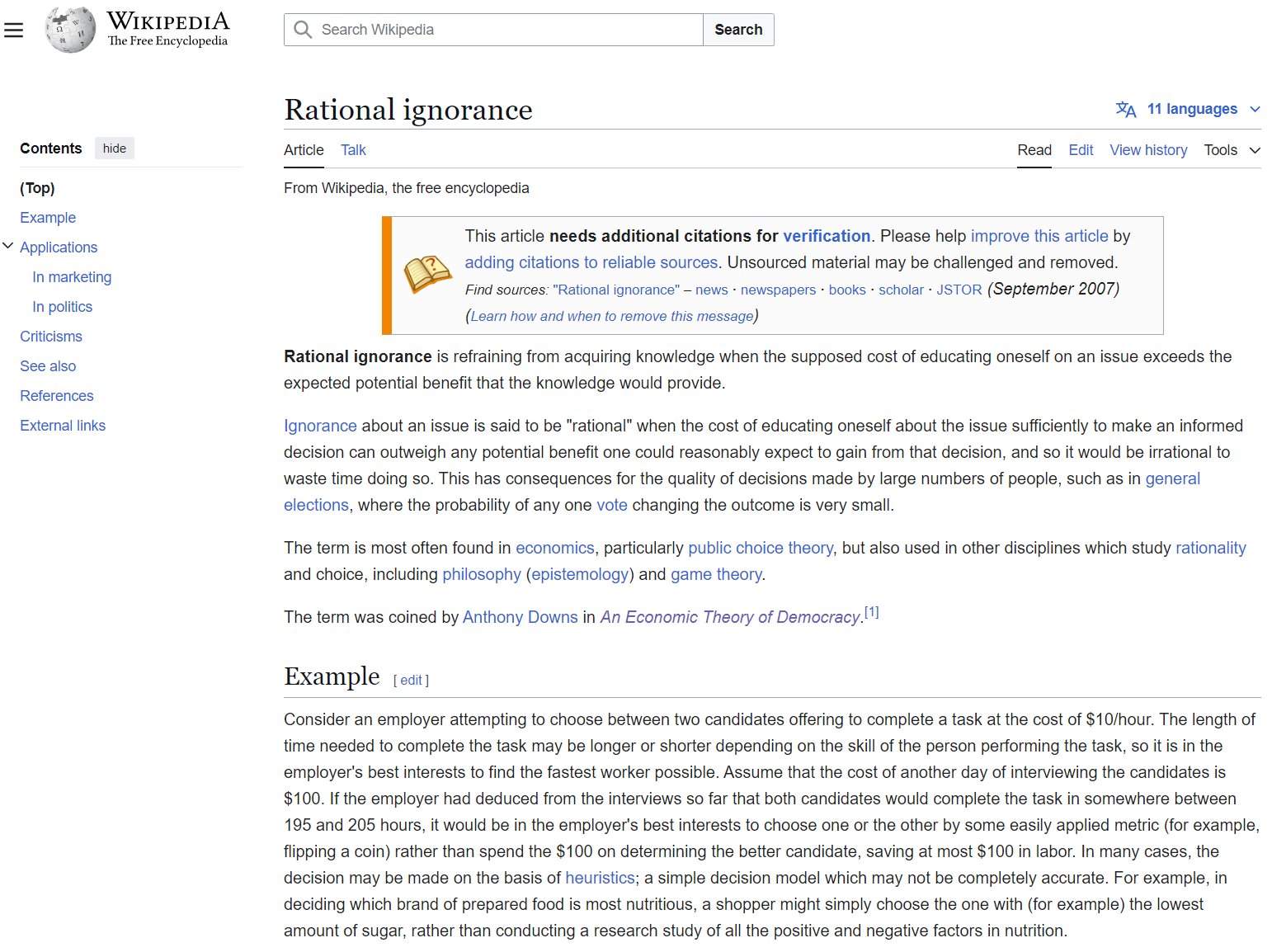
It is rational for an individual to be ignorant about the things that hardly affect them or that they cannot influence if the cost of educating oneself sufficiently to make an informed decision outweighs the expected benefit. This is a serious problem with representational democracy in a nation with millions of people. Representational democracy tends to result in voter apathy.
Compulsory voting doesn't help
Some countries make voting compulsory, but that doesn't fix the underlying problem which is voter apathy. Compulsory voting does nothing to increase the number of informed people.
Rational ignorance is much less of a problem with voluntary direct democracy
A factor in favour of voluntary direct democracy, is that decisions often involve specific issues in local districts (such as the funding for the music department in a local school), and the number of people affected is small, so the influence of each voter is large, and also the cost of properly understanding the specific issue is small (e.g. reviewing the balance sheet for the music department).
Rational ignorance isn't a problem in direct democracy, if voting is voluntary. It is better to be well informed about a small number of things that are important to a person, and only vote on those, than to vote on lots of issues with limited knowledge.
Median voter theorem
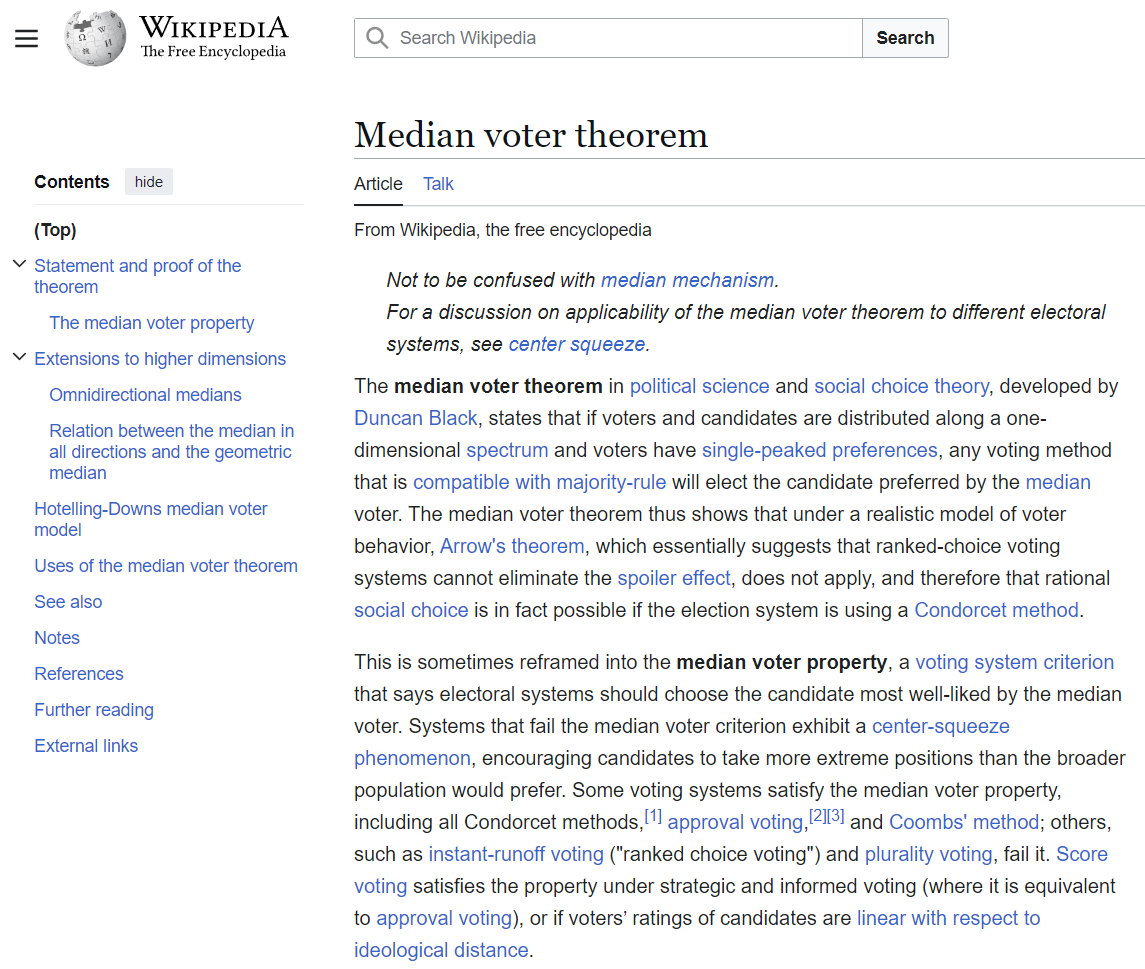
There is an unfortunate tendency for honest politicians that act strongly on issues to lose against politicians that act according to self-interest. The latter tend to select policies which appeal to the median voter because that strategy is best to win elections.
Finding honest politicians
The hard problem of finding honest politicians that act in the people's interest and have adequate information about the circumstances and wants and needs of each person they represent is eliminated.
 >
Gerrymandering
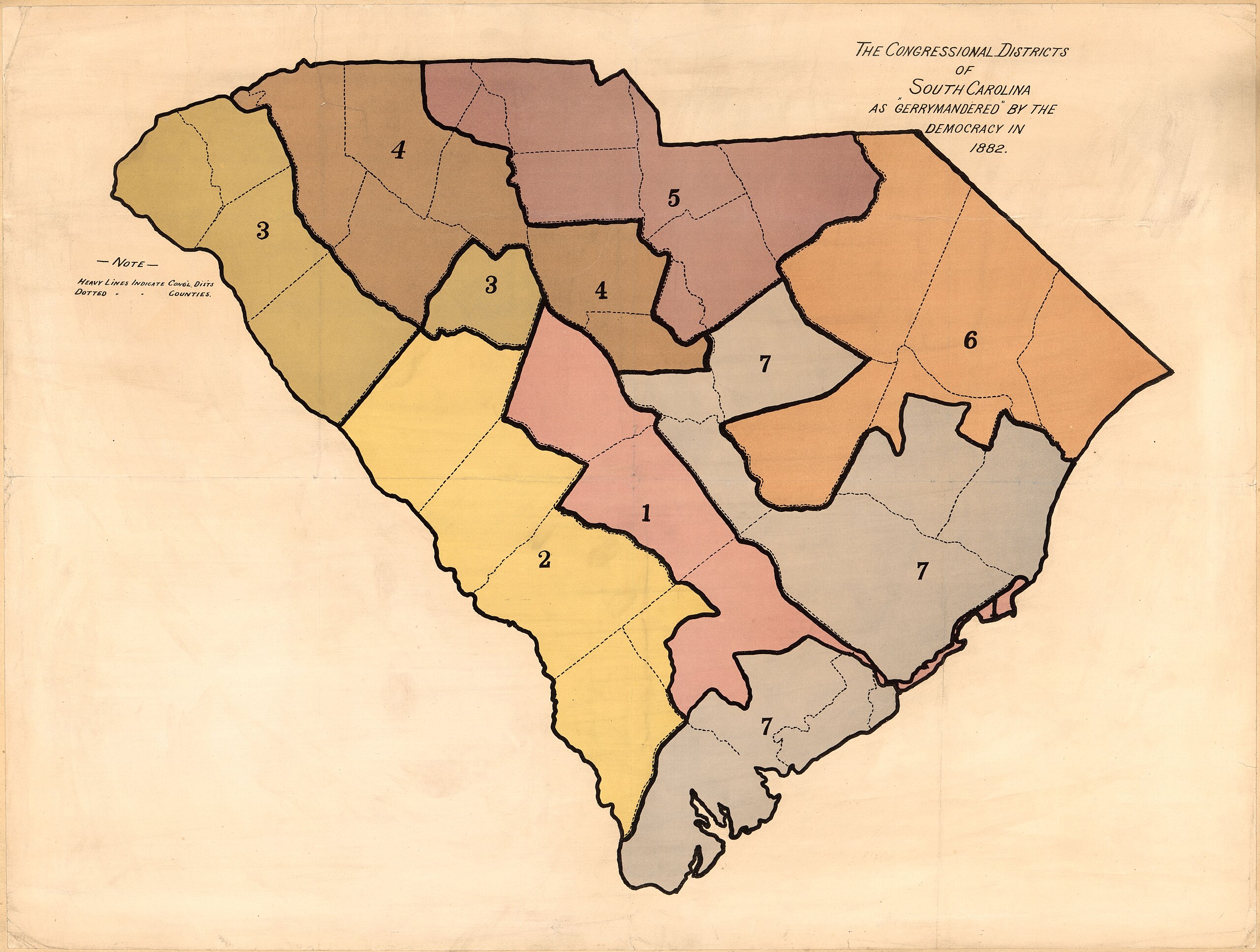
The hard problem of getting consensus on how to fairly split the population into electorates is eliminated.
Need to be seen as consistent
A person who has been vocal about an issue tends to retain their position over time, to be seen as consistent. This is one of the problems faced by politicians. Even though the ability to change one's mind should be applauded, it is paradoxically often seen as a weakness, and terms like flip-flop, u turn or back-flip are used. The economy of a nation is always full of unknowns, and the ability to change one's mind is important. With anonymous voting it is easier for a person to vote according to what they believe at that time, without their vote being influenced by what other's may think.