5.1 No tyranny of the majority
There is a famous quote saying democracy is two wolves and a lamb voting on what they are going to have for lunch. The NDP makes such tyranny of the majority impossible, because discrimination in any initiative, whether in favor of or against any group, is prohibited.
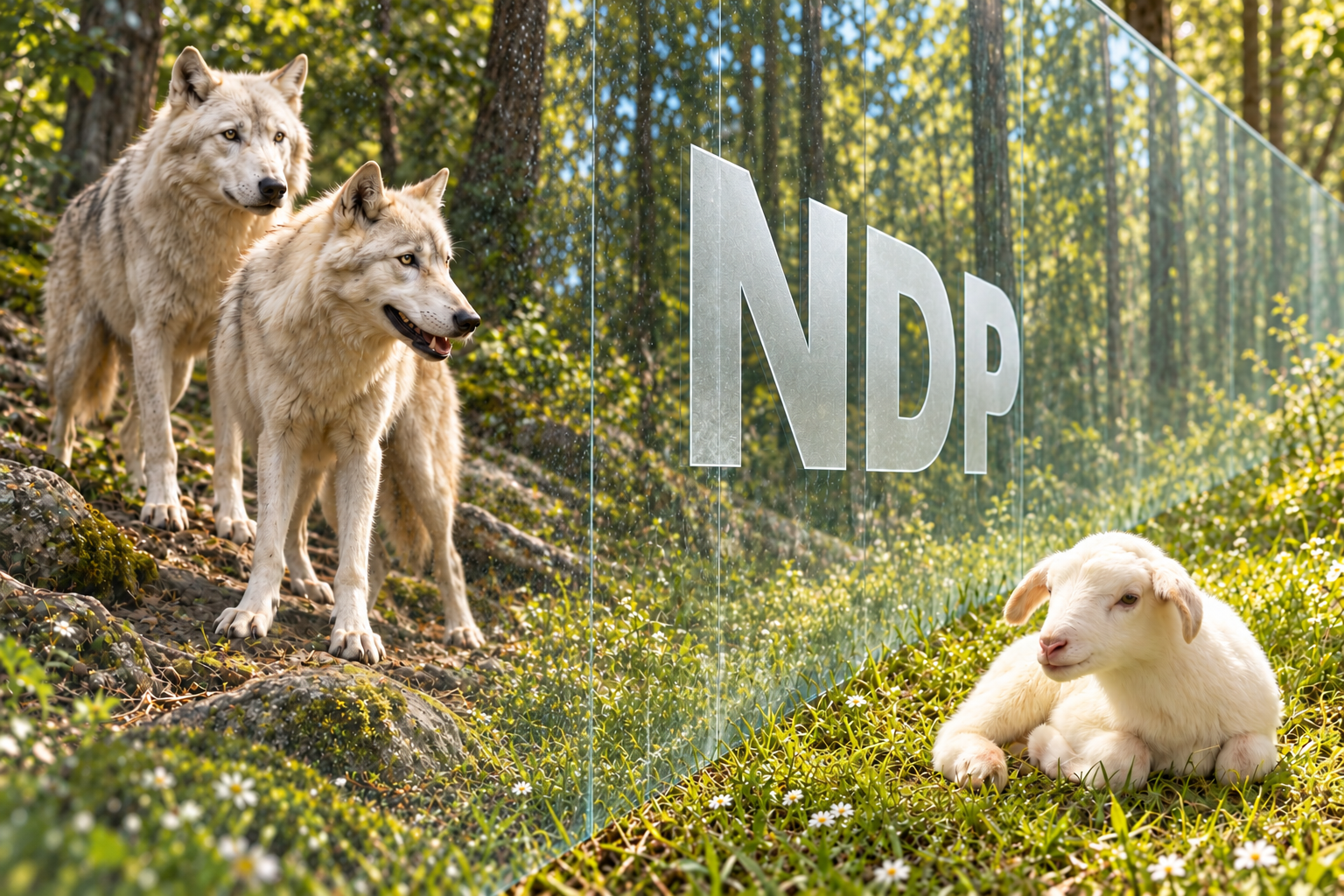
The mechanism is straightforward: a stable majority can use its votes to give itself benefits while concentrating the cost on a minority, for example through selective taxes, restrictions, exclusions, or confiscation. Because the majority receives the benefit and the minority lacks the votes to stop it, the same group may lose repeatedly. Majority rule then gives every citizen an equal vote without giving every group an equal prospect of influencing political outcomes.
Madison’s proposed safeguards
In Federalist No. 10 (1787), James Madison proposed representative government and a large republic as safeguards against this danger. Representatives were expected to refine public judgement, while a larger political community would contain more competing interests.
Extend the sphere, and you take in a greater variety of parties and interests.
Madison believed this diversity would make it harder for one faction to form a durable majority united by a common motive to violate the rights of others.
Paradoxically, representative government suppresses the very variety of parties and interests that Madison sought to preserve. One need not extend the republic or travel to another region to encounter different interests; it is enough to ask another person. Individuals living in the same electorate may agree on one issue and disagree completely on the next. Yet representative government compresses all of those changing combinations into one representative and one bundled platform. Direct voting preserves the underlying diversity by allowing every person to take an independent position on every initiative.
Neither safeguard can be relied upon in general. If representatives act in their rational self-interest, their overriding incentive is to win elections, which may require serving the majority at the expense of a minority rather than protecting it. A large republic is no guarantee either, because a durable majority can still form across a large territory.
Other proposed safeguards
For centuries, democracies have tried to restrain majorities with constitutions, courts, upper houses, federalism, proportional representation, and supermajority rules. Each places another obstacle in the path of an oppressive majority. None removes its power to oppress.
A majority can win both houses, appoint the judges, dominate every level of government, or reach the required supermajority. Two‑thirds tyranny is still tyranny. These safeguards may slow a majority down, but the safety of the minority still depends on institutions choosing to protect it.
By contrast, the NDP is the ultimate safeguard: it prohibits the majority from using the state to treat a minority differently and thereby makes tyranny of the majority impossible.