Chapter 29: Procurement
The NDP and the choice of an operator
The constitution requires every public service to have a private operator:
Each service shall be defined by a contract with a private operator, operating under profit and loss.
A service contract may therefore name the private operator contracted to provide the service. At first this appears to conflict with the Non‑Discrimination Principle: selecting one operator necessarily treats that operator differently from every unsuccessful candidate. The NDP, however, expressly permits a distinction relevant to this choice:
The State shall not discriminate, including through its laws, policies, procurement, pricing, fees, charges, or access to services, except in cases involving:
- Merit‑based suitability for a task
Procurement establishes the constitutional basis for naming a particular operator. The choice must be based on the operator's merit for the task, rather than favouritism, political influence, identity, connections, or arbitrary preference. The proposed contract must define the service, its constraints, and the basis on which merit is measured. The proposal must also justify the choice of operator using evidence relevant to those criteria. Criteria invented to favour a particular candidate would not make the selection merit‑based merely because they were written down.
The constitution subjects the proposal to review before citizens may vote on it:
- Every initiative must undergo a formal constitutional review before it may be made available for voting.
- The purpose of the review is solely to determine whether the initiative complies with this Constitution. The review shall not assess the desirability, wisdom, or political merit of the initiative.
- An initiative that fails constitutional review shall not proceed to a vote.
The reviewing judicial service does not decide which bidder would be the wisest commercial choice. It decides whether there is a genuine, relevant, and consistently applied basis in merit for distinguishing the proposed operator from the other candidates. A proposal which names an operator without providing that basis should fail constitutional review under Article XI, Section 3.
Tenders
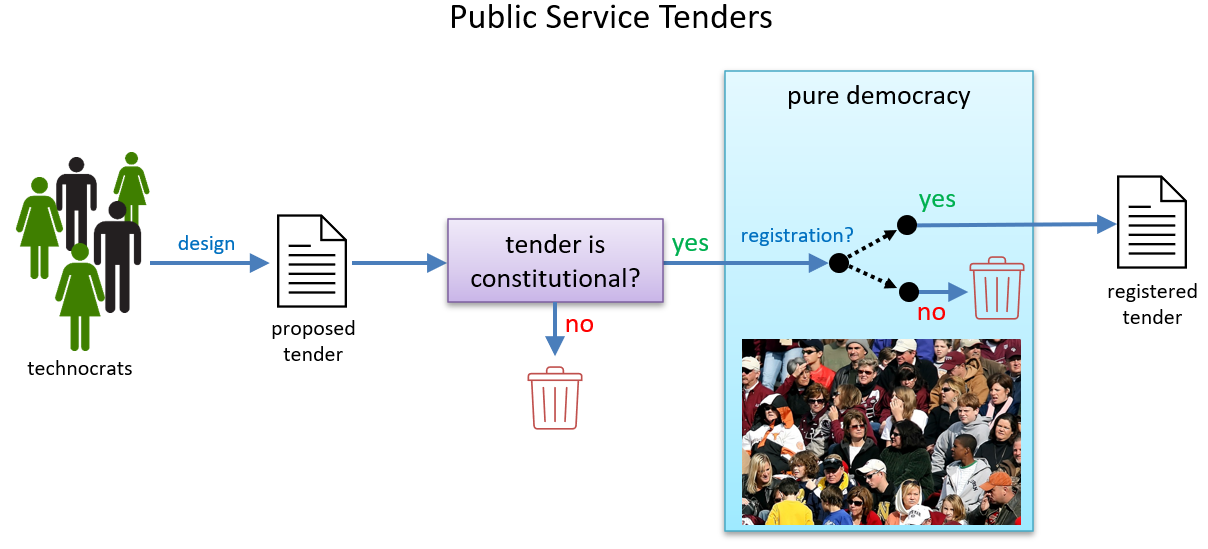
Choosing an operator on the basis of merit requires candidates to be assessed against the same clearly defined task. The public therefore first defines the service to be provided using a tender. The tender supplies the common basis for comparing the merits of competing operators. A tender specifies all the required features of a new service or proposed changes to an existing service and must be detailed enough to allow service operators in the private sector to bid on price. Anyone can propose a public service by submitting a tender. It may be somewhat informal at this stage, and typically would be discussed in online forums, and go through a sequence of drafts, allowing it to be improved. Eventually it is submitted for the mandatory formal review process, to check that it is coherent, unambiguous, constitutional, consistent, and complete. Tender registration involves optional online voting, and must have a minimum number of votes and a minimum proportion of votes in favour of its registration.
Procurement
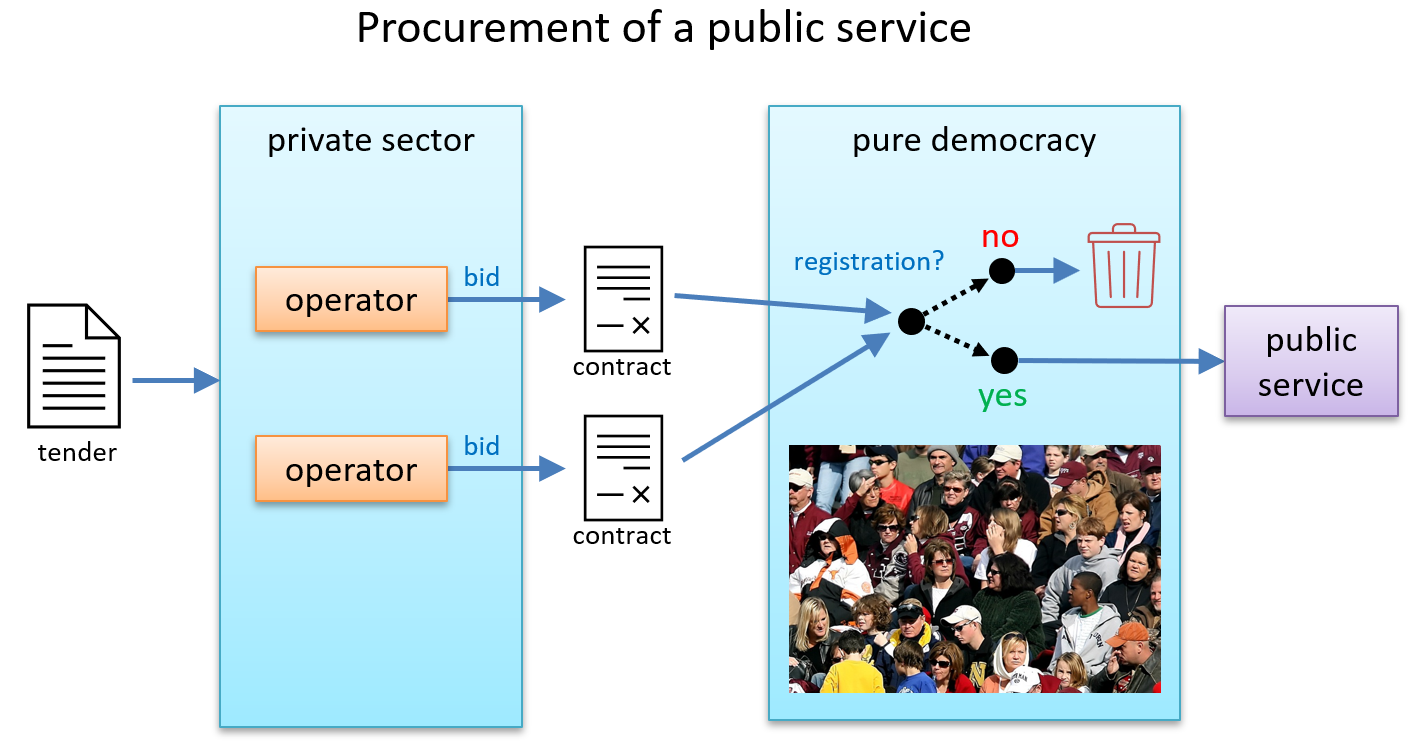
After a tender is registered service operators can submit bids. They compete on quality, trust, and price. A bid consists of a service contract as well as other information, such as details about previous relevant work by the operator, presentations and demonstrations. The public vote on the bids. This is n-way voting. The successful operator signs the service contract. After the service contract is signed, the public vote on registration of the service. Service registration involves optional online voting, and must have a minimum number of votes and a minimum proportion of votes in favour of its registration. Tax can only be allocated to registered services.