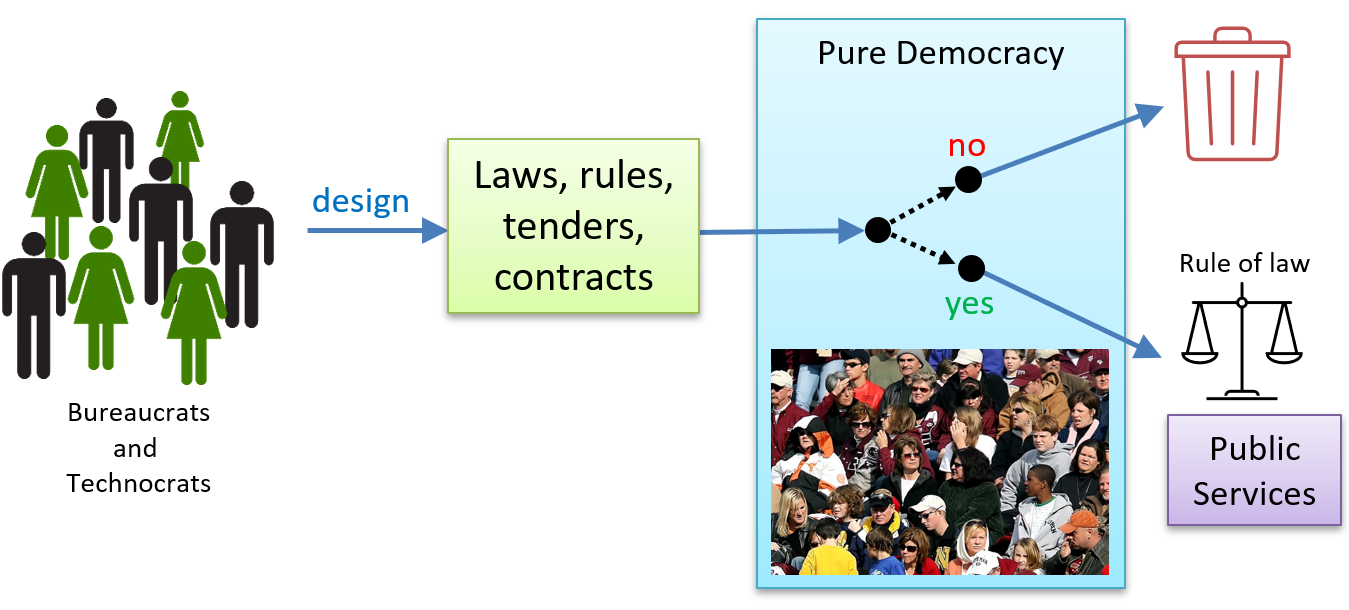
21.4 The people should have the final say
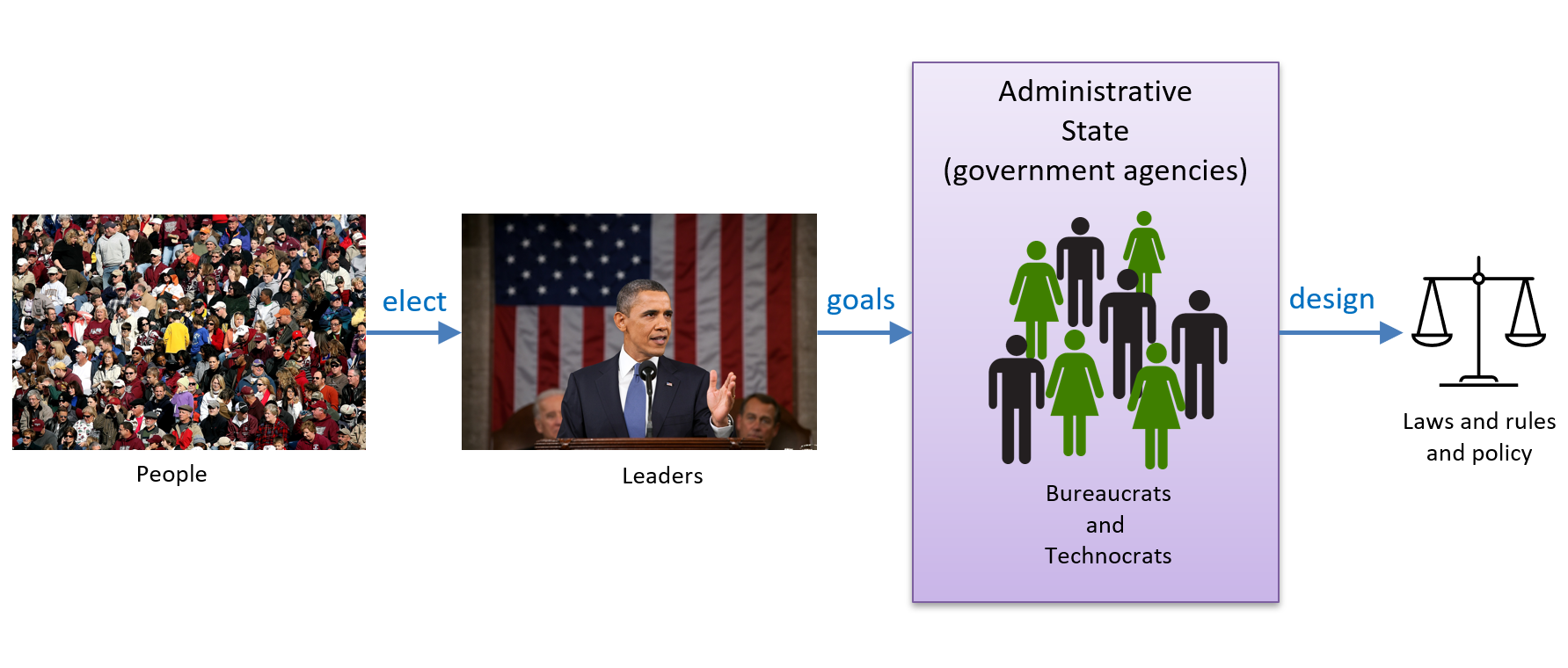
Indirect democracy gives bureaucrats the final say
Under representational democracy the people elect leaders that pass on goals to the technocrats that design the initiatives. There is inevitably a government with an administrative state that makes all the important decisions, and the people are disenfranchised. Over time there is a tendency for the leaders to only be figureheads. Spending and taxes increase, the administrative state grows, laws and regulations become more complex, and the people become less free.
Direct democracy gives the people the final say
Direct democracy does not dispense with technocrats or require every citizen to become an expert in designing initiatives and service contracts. Technocrats still investigate problems, develop solutions, estimate costs, and formulate detailed proposals. There can be competing technocrats designing competing initiatives with different goals and methods.
What changes is the order of authority. Under representational democracy, people choose a political party partly on the basis of its promised initiatives, after which politicians, bureaucrats, and technocrats determine what is actually implemented. Under direct democracy, the completed initiatives are put to the people themselves. The technical work remains upstream, but the people are placed at the end of the decision tree: they decide which initiatives are enacted.