5.6 The NDP collapses complexity
Most of the complexity in modern states comes from differential treatment: different tax brackets, welfare categories, eligibility tests, subsidies, exemptions, compliance rules, and enforcement pathways. Once a government begins dividing people into categories, the machinery required to administer those distinctions grows without limit. A state bound by the NDP would look nothing like the systems we are accustomed to. The intricate architecture of categories, thresholds, special cases, targeted programs, and administrative carve‑outs would disappear. In their place would stand simple, universal rules that apply to everyone. Flat or continuous functions would replace cliffs and brackets; transparent incentives would replace opaque bureaucratic discretion.
Every time the state treats one group differently from another, it must:
- define the group
- test membership
- monitor compliance
- enforce boundaries
- handle appeals
- revise definitions as circumstances change
This is where bureaucratic sprawl comes from. Discrimination requires categories; categories require administration; administration requires bureaucracy. Remove the ability to discriminate and you remove the need for categories, thresholds, exceptions, and special cases. The entire structure collapses into something far simpler.
If the state can discriminate, it will, because political incentives reward targeted benefits and selective burdens. But if the state cannot discriminate, those incentives vanish. The only viable tools left are universal mechanisms, and universal mechanisms are inherently simpler, more transparent, and more stable.
Simplicity
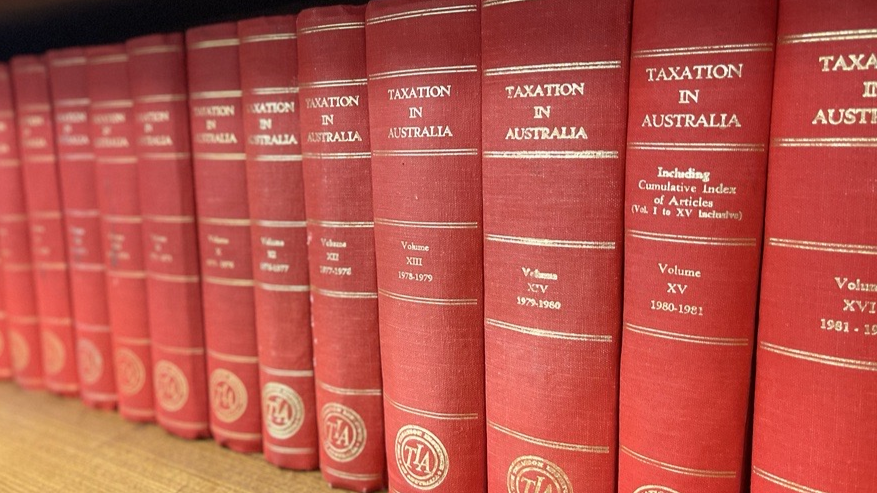
Economic systems today tend to be extremely complex. For example, the tax systems in many countries are only understood by tax professionals.
The proposed system is extremely simple in many ways:
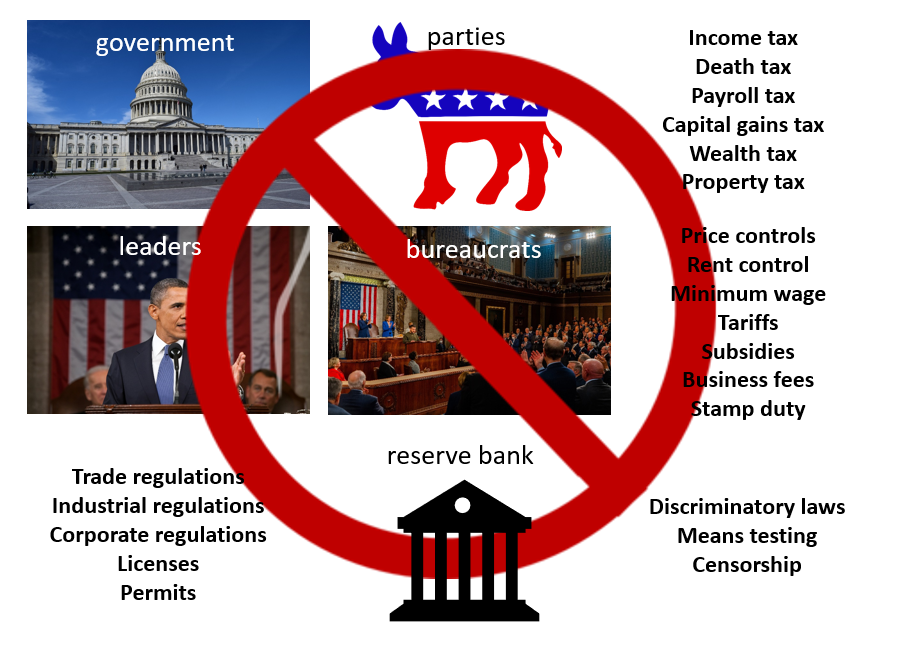
- There is no government, political parties, representational democracy, bureaucrats, and elections
- There are very few regulations on producers
- The tax system is just a flat consumption tax applied equally to all goods and services, it is so simple it is fully automated
- There is only one kind of money, all recorded in the central bank
- The money supply is fixed
- Banks are just financial intermediaries with no special rules
- There are no tariffs, subsidies, permits, license fees, registration fees
- Free speech is virtually unconditional
- The rule of law is under one system, using a priority order to help resolve ambiguities
- Instead of a complex welfare system with means testing, and needing thousands of public officers to administer, there is just a UBI which is fully automated.
This makes the economy easy to understand and predictable, people can make rational choices, and the public can rule themselves effectively with direct democracy.
The system is radical in many ways. One of the most striking is its radical simplicity. This simplicity makes the economy easy to understand, and, just as importantly, predictable. When citizens can clearly see how the system works, they gain confidence in its fairness and stability. Complexity breeds confusion and mistrust. Simplicity breeds transparency and trust.