7 Configuration management
Operational Transformation is useful at more than one timescale. In an interactive session, users can see one another's edits as they type, draw, or manipulate structured objects. In configuration management, users deliberately work in isolation and control when changes are published, branched, or merged.
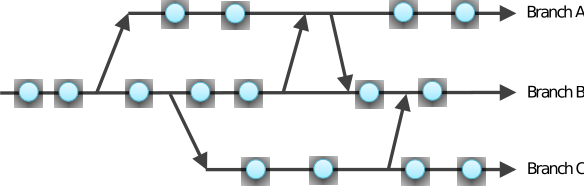
Both modes treat changes as first-class operations over the data model. A branch can cover a coherent database rather than a loose collection of files, and merging can use the semantics of the underlying data types. Applications can choose between immediate propagation and controlled publication without abandoning the same persistent object and operation infrastructure.